Bookmark

Sign up or login to use the bookmarking feature.

46 Learning to View

Page
255
from

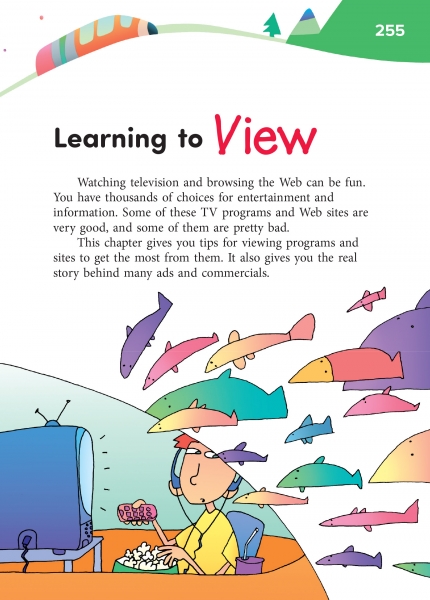
Learning to View Opening Page

Start-Up Activity

Have a class discussion about what shows or programs students recently watched on TV. Did they like them, or not? What did students learn from their viewing? What confused or bothered them?

Discuss the difference between real-life and pretend shows, and try to help students tell them apart. Pretend shows, like sitcoms and cartoons, tell make-believe stories through the actions of characters. These shows are meant to entertain us. Real-life shows, like news programs and documentaries, show images of people doing real things in real life. These shows are meant to inform us.

Think About It

“Television isn't inherently good or bad. You go to a bookstore, there are how many thousands of books, but how many of those do you want? Five? Television's the same way. If you're going to show people stuff, television is the way to go. Words and pictures show things.”

—Bill Nye
 

State Standards Covered in This Chapter

LAFS Covered in This Chapter

TEKS Covered in This Chapter

TEKS Covered in This Chapter

Page 256 from Write on Track

Viewing News Programs

Review with students the tips for viewing news programs with a careful eye. Introduce the 5 W's and H strategy. Good news stories answer all of these questions, and students can seek answers to the questions as they view news programs. News programs that don't answer all the questions might be missing important information. If possible, model asking and answers the questions while watching a news video with your class.

State Standard Reference:
LAFS Standard:
TEKS Standard:
NE ELA Standard:

Related Resource Tags

Click to view a list of tags that tie into other resources on our site

Level:
21st Century Skills:

Page 257 from Write on Track

Viewing Educational Programs

Ask for volunteers to read aloud the first paragraph, which introduces documentaries. Then lead students through the process for viewing documentaries—before, during, and after. If possible, show students a short documentary and have them follow the viewing process.

State Standard Reference:
LAFS Standard:
TEKS Standard:
NE ELA Standard:

Related Resource Tags

Click to view a list of tags that tie into other resources on our site

Level:
21st Century Skills:

Page 258 from Write on Track

Viewing Advertisements

Discuss the importance of viewing ads carefully. Let students know that the primary purpose of ads is to sell something. The information in them is often exaggerated, untrue, or otherwise untrustworthy. In particular, students should watch out for the common selling methods listed here.

Consider providing an example of each from a television commercial or print ad. Then ask students to identify one or more of the selling methods the next time they watch TV.


State Standard Reference:
LAFS Standard:
TEKS Standard:
NE ELA Standard:

Related Resource Tags

Click to view a list of tags that tie into other resources on our site

Level:
21st Century Skills:

Page 259 from Write on Track

Viewing Web Sites

Let students know that not all the information they find on the Web is true. It is important then to test the truth of information found on Web sites. The three tips on this page can help students do that:

  • Check to see who publishes the Web site.
  • Check for current dates.
  • Check other sources.

Model these tips by evaluating a Web site of your choice. Then give students a chance to do a similar evaluation with a different sample Web site.


State Standard Reference:
LAFS Standard:
TEKS Standard:
NE ELA Standard:

Related Resource Tags

Click to view a list of tags that tie into other resources on our site

Level:
21st Century Skills: